Workforce Strategic Planning LIVE
Course Description
The Workforce Strategic Planning LIVE Class gives participants the end-to-end understanding of the Workforce Management lifecycle from clean data to real-time execution.
Built around SRC’s proprietary frameworks, this 4-day immersive experience transforms theory into application with hands-on labs, case studies, and interactive simulations.
Participants leave with:
A clear understanding of the four pillars of Workforce Management
Practical skills to forecast, schedule, and manage intraday operations
Templates, models, and playbooks ready for real-world use
A recognized SRC certification that validates their WFM capability
Certification
Professionals who complete this program and pass the assessments earn the Workforce Strategic Planning Certified, Powered by SRC Frameworks™ designation.
This credential signals to employers, customers, and stakeholders that you are not just familiar with WFM, you are trained, tested, and certified in the discipline of strategic workforce planning.
This certification validates that participants can:
✔ Apply CLEAR to ensure clean, trustworthy operational data
✔ Build forecasts and capacity plans using the LCSR methodology
✔ Design schedules that align staffing, demand, and experience using D4
✔ Manage real-time performance with ACT-level precision
✔ Translate WFM strategy into measurable business outcomes
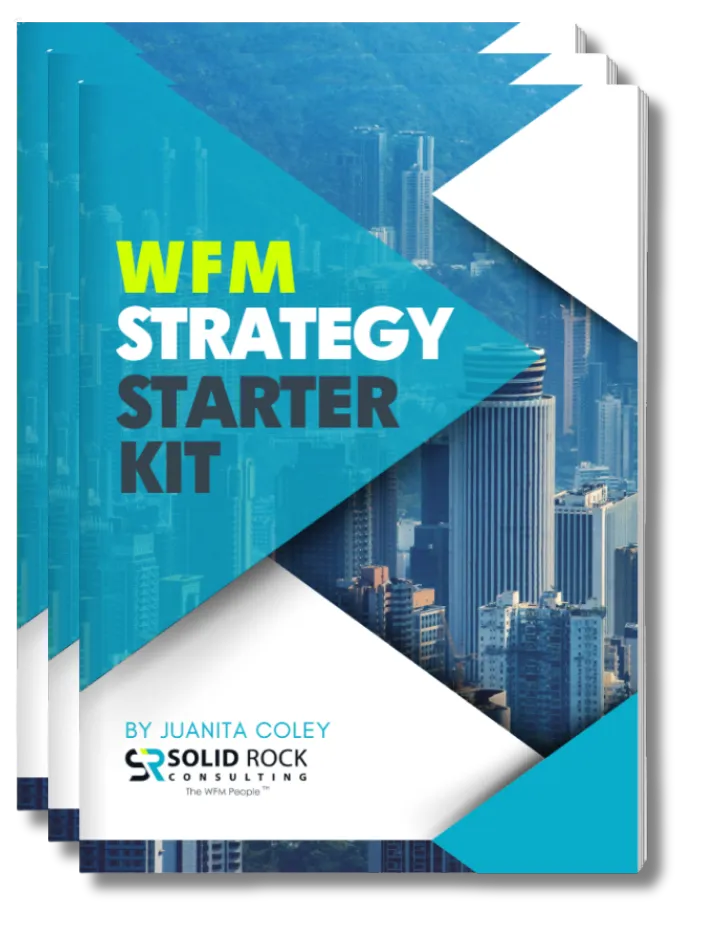
Workbook sample Sneak Peek
Get an inside look at the course content, with lessons
taken right from the official workbook!
Course Outline
Day 1: CLEAR Data Framework — Building the Foundation
➤ Benchmark assessment (pre-test)
➤ What WFM is and why it matters
➤ Understanding the CLEAR Framework (Collected • Linked • Evaluated • Accessible • Retained)
➤ Data sources and data integrity
➤ Mapping operational data flows (C + L exercises)
➤ Evaluating, accessing, and retaining data (E + A + R)
➤ CLEAR Scorecard assessment
➤“Data Detective” simulation
➤ Day 1 quiz + reflection
Day 2: LCSR Forecasting Framework — Knowing What’s Coming
➤ Forecasting fundamentals (Long-Range • Capacity • Short-Range • Reforecasting)
➤ Understanding forecast inputs
➤ Cleaning and validating data for forecasting
➤ Building workload and demand drivers
➤ Capacity planning basics
➤ Short-range interval review and staffing alignment
➤ Variance analysis and reforecasting practicals
➤ Hands-on forecasting lab
➤ Day 2 quiz + reflection
Day 3: D4 Scheduling Framework
➤ Understanding the D4 Framework (Demand-Driven • Distributed • Dynamic • Disruption-Ready)
➤ Translating forecasted demand into staffing requirements
➤ Building schedule strategies aligned to demand patterns
➤ Distributed workforce scheduling (on-site, remote, hybrid) while considering AI
➤ Dynamic flexibility: shifts, part-time blends, split scheduling, mobility
➤ Planning for disruption: outages, spikes, understaffing, call-outs
➤ Shrinkage modeling: planned vs. unplanned
➤ Coverage analysis and optimization
➤ D4 Scheduling Lab
➤ Day 3 quiz + reflection
Day 4: ACT Intraday Framework
➤ Understanding intraday performance metrics
➤ Real-time adherence, shrinkage, and occupancy
➤ Monitoring queues and reallocating capacity
➤ Tactical levers (AHOD, VTO, OT, channel shifting, reskilling)
➤ Intraday simulation scenario
➤ Final exam & certification readiness
Who Should Attend
This program is designed for professionals responsible for turning workforce strategy into real operational performance. Ideal attendees include:
➤ WFM Analysts & Coordinators who want deeper mastery of forecasting, scheduling, and intraday control
➤ Team Leads & Supervisors looking to level up their understanding of staffing, performance, and planning
➤ CX & Contact Center Leaders who need a stronger command of WFM to drive service, efficiency, and employee experience
➤ New or Emerging WFM Professionals seeking a structured, framework-based introduction to the discipline
➤ Operations Managers who rely on accurate plans and real-time management to meet business goals
This class is built for anyone who wants to move beyond tactics and learn how to run a workforce using a proven, strategic approach.
What You Will Learn
In this program, you won’t just learn WFM tactics, you’ll learn how to use Workforce Management as a strategic engine that improves experiences, optimizes resources, and drives measurable business results.
Participants will learn how to:
➤ Build a clean, reliable data foundation that improves decision-making across the customer journey
➤ Forecast and plan with intention so staffing aligns with demand, reduces waste, and protects experience
➤ Design smart, flexible schedules that support HYBRID workforces AI + Human employees while meeting operational and financial goals
➤ Manage real-time performance in a way that strengthens service delivery and operational control
➤ Connect data → forecast → schedule → intraday into one strategic system leaders can rely on
Use WFM to increase efficiency, protect revenue, and improve CX & EX simultaneously
This isn’t just how to do WFM.
It’s how to use WFM to transform the business.
Private Training
Customized Private training just for your organization's WFM and/or Ops team.
Varies
Virtual Classroom
Live, online instructor-led training.
January 13-16, 2026
9:00 am-5:00 pm ET
$1,999
February 10-13 2026
9:00 am-5:00 pm ET
$1,999
March 3-6 2026
9:00 am-5:00 pm ET
$1,999
April 7-10 2026
9:00 am-5:00 pm ET
$1,999
Follow SRC on Social


